

Plenty of manufacturing lines, material-handling conveyors, and pump stations still run Schneider Electric Altivar 71 (ATV71) variable speed drives. Since the ATV71 series reached end-of-life, replacement control boards and complete drives carry zero factory warranty and are getting harder to find on short notice.
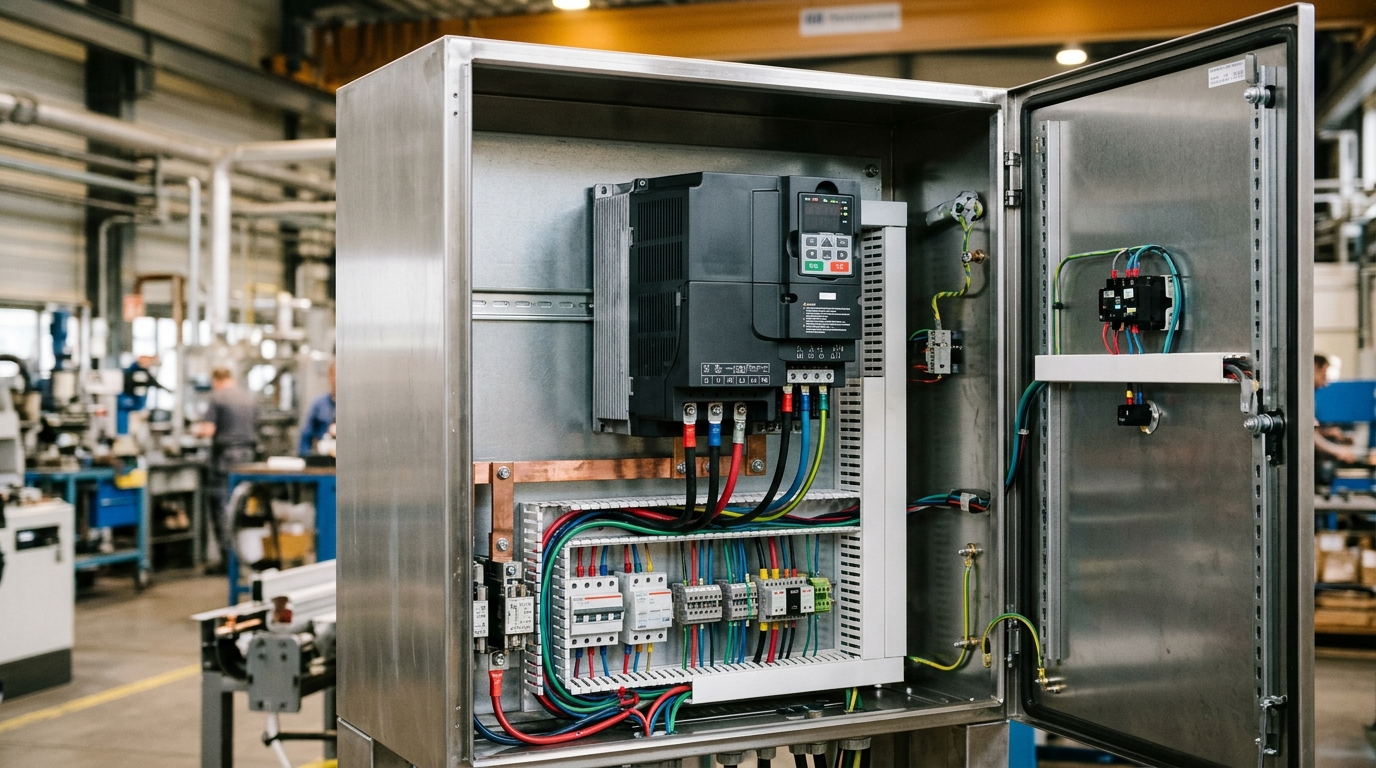
Why Running Obsolete ATV71 Units Carries Risk
Even when an older drive looks stable on the surface, electrolytic DC-bus capacitors, cooling fans, and gate-driver components wear down with heat and operating hours. When an aging ATV71 trips permanently mid-shift, maintenance teams often end up waiting days while buyers scramble through surplus listings for unverified spares.
What Changes When Moving to ATV900 or ATV340
Schneider Electric's migration path splits heavy-duty and machine work between Altivar Process (ATV900) for pumps, fans, crushers, and conveyors, and Altivar Machine (ATV340) for high-dynamic OEM machinery and hoisting. Both lines move away from legacy Modbus and CANopen fieldbuses to native dual-port EtherNet/IP and Modbus TCP, which makes PLC integration a lot cleaner without external gateways.
Safety Circuit Migration: PWR to Safe Torque Off (STO)
Older ATV71 panels usually wired emergency-stop interlocks into the Power Removal (PWR) terminal. On ATV900 and ATV340 drives, that job is handled by dual-channel Safe Torque Off (STO) inputs built to SIL3 / PL e safety standards. Electrical engineers should check existing E-stop relay diagrams before commissioning so safety loops clear without nuisance faults.
Parameter Mapping and Motor Tuning
Control parameters from an ATV71 cannot just be loaded straight into an ATV900 or ATV340 file. Before disconnecting the old drive, export or write down key motor nameplate values (rated voltage, FLA, base frequency, ramp times, and PID scaling) and double-check whether the line runs in open-loop V/f, sensorless vector, or closed-loop encoder mode.
Mechanical Footprint and Panel Clearance
Frame sizes, mounting hole patterns, and cable entry heights do not line up 1-to-1 across every kW rating. Before issuing a purchase order, measure cabinet depth, check airflow clearance above and below the heatsink, and see if a retrofit mounting plate is needed for the existing backplate.
Phased Procurement Strategy
Instead of waiting for a drive fault to stop a line, audit installed ATV71 nameplates now by checking:
- Rated motor power (kW/HP) and supply voltage
- Installed fieldbus or encoder option cards
- Available cabinet depth and cooling clearance
Keep a small buffer of verified spares only for secondary lines, and budget phased panel retrofits to ATV900 or ATV340 on critical assets during planned shutdowns.